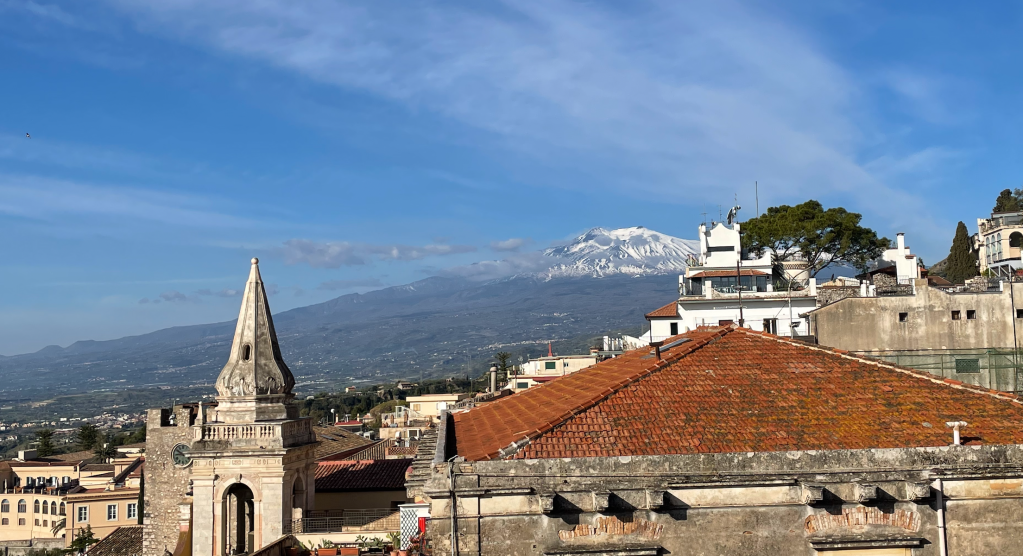
I love to see new places. Those can be close to home or far away. I know that a person’s time on beautiful Earth is limited, and it would be a shame to not explore what is out there to admire. However, I wonder, should one still travel internationally when we know about all its downsides: emissions, pollution, water usage, overcrowding and all the rest? So, feeling a bit guilty while sitting in the sunshine on Sicily, I think this is the time to write a post to figure it all out.
Why stray far?
My love for exploring the many miracles of our home planet includes weird adventures at my doorstep, like checking out even the smallest museums, walking every tiny path in the village or trying to learn about ancient techniques like embroidery or knitting. I join the choir or try the badminton club. It is fun to peek into the many layers of the human experience.
However, far away places offer greater contrast to the familiar, and so are even more rewarding to the intrepid explorer. Only nowadays, we know so much more about the environmental and societal impact of tourism and travel. So, we need to be mindful of that. Over-tourism like anything that starts with over- is not a good thing. Obviously, if we tourists use all the water and eat all the food, this is harming the very environment we came to enjoy. And of course, the travel itself by carbon spewing airplanes or fossil fuel gobbling cars is nothing to be proud of.
Building connections
On the other hand, travel and tourism help to raise awareness and concern in the first place. After World War II, peace makers decided to encourage travel within Europe: not only for some evil economic interest but as well to foster friendship and understanding between the countries that all too often had been at war with each other. Student exchange programs should enable the next generation to learn new languages, customs, and ideas.
Why do we worry about increased forest fires in the Mediterranean? Because we have been there and we admired its beauty. So we feel a deeper connection to the cause. Yes, one can argue that at a fundamental level we should care equally about all humans in dire circumstances. But experience proves that people care more about the familiar and less about things far away. So, the drought in Spain is receiving more of our attention than the drought in Somaliland.
Thanks to tourism, communities can generate a living from natural beauty or cultural heritage, assets which would otherwise provide no sustenance.
I feel that there is no right or wrong out there. If we all only spend our holidays cycling around the neighbourhood, we save emissions, but in the long run we lose other ingredients of a sustainable development: international relations and appreciation of the Other.
Instead, the solution might lie again in boring moderation. Travel, but try to do it consciously. Admire what is out there without destroying the very things you came to see. Try to make the most of your trip by learning about the places you went to. I suspect that there is a solid place for extensive sunbathing and drinking in holidays, but it would be lovely if some additional values could be achieved within the same trip.
Our humble existence in the passage of time
For my own Sicily trip I feel content: it is humbling to see how many cultures and civilisations have claimed Sicily as their own over the millennia: Greek, Roman, Arabs, Normans, French, Spanish, and how they all vanished over time, leaving only a few stones and customs behind. Maybe we should take ourselves a bit less seriously: instead of building and destroying empires, get on with our lives, with our neighbours and family. And travel to foreign places without any urge to colonise, change, or occupy them.
I think it is true, wherever we end up going: come as open-minded guest and leave as friend.

 Content Creation Matters
Hinterlasse einen Kommentar